
news
The yen depreciated, the stock market broke 70000 points, the Bank of Japan "walking a tightrope" type of interest rate hike restart.
The Bank of Japan announced on the 16th that it would raise its policy interest rate from 0.75 percent to 1.0 percent. This is the first time since 1995 that Japanese interest rates have returned to the "1 era", and it also means that the country has officially bid farewell to the ultra-loose monetary policy of zero interest rates and negative interest rates that has been maintained for about 30 years. For Japan, this is not just a routine interest rate hike, but a clear announcement: the 30-year era of "cheap money" has come to an end, and the normalization of monetary policy has entered a new stage.
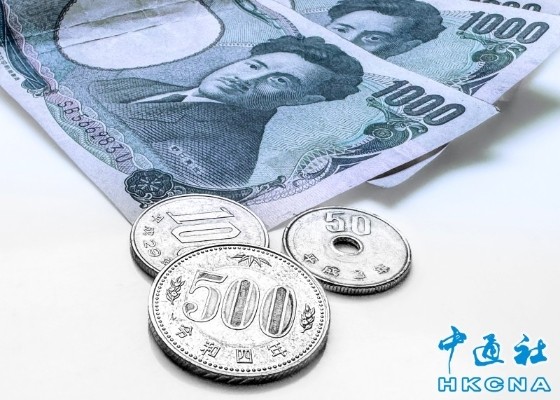
The picture shows the Japanese yen Hong Kong China News Agency
What prompted the Bank of Japan to finally make up its mind to raise interest rates was not external pressure, but internal scorching heat. The pastInflation in JapanExpensive imported oil is often blamed, but this time, things have changed. In the past three years, companies have had to raise wages to retain employees, and then pass on labor costs to commodity prices. This creates a dangerous cycle: wages rise, prices rise, and if the central bank does not act, money will become less and less valuable.
Market analysis pointed out that even if the easing of the situation in the Middle East makes oil prices fall temporarily, this kind of price rise driven by domestic demand will be difficult to stop. Because of this, the interest rate hike is precisely to put the brakes on this galloping train.
But what really surprised the market was not the rate hike itself, but the way the Bank of Japan stepped on the brakes. While raising interest rates, it also announced that it would suspend the reduction of bond purchases from April 2027 and maintain a monthly bond purchase scale of 2 trillion yen, which is known as "balancing" in financial circles ". Simply put, the Bank of Japan is in a dilemma: it needs to raise interest rates to suppress inflation and stabilize the yen, but it does not dare to really make the money in the market too expensive. At present, the Japanese government is saddled with a debt of more than twice GDP, and if long-term interest rates soar, the government's interest payments will snowball and the finances will risk collapse. Therefore, the central bank while using the "interest rate" hand to show the market the determination to control inflation, while using the "buy debt" hand to hold down long-term interest rates, to the government's debt crisis.
This exquisite tightrope has immediately torn a huge rift in the financial market. On the same day, the Japanese exchange rate, which represents the purchasing power of the people's wallet, was cheered.
The reason why the Nikkei 225 index can set a 70000 point myth is not because the interest rate hike itself is good, but because the market believes that the Bank of Japan's interest rate hike is moderate and controllable. Li Huihui, a professor at Lyon Business School in France, believes that the signal that investors see is that the endogenous power of the Japanese economy is strong enough to withstand 1% interest rates. Coupled with the effectiveness of corporate governance reforms, the influx of foreign capital has pushed up the stock index. But the currency market is a different story. Although the Japanese authorities threw 11.7 trillion yen to intervene last month in an attempt to hold the yen, the effect was fleeting. Li Huihui said that for global capital, the 1% interest rate is still too low, and the United States has a higher return. As long as the spread exists, the yen remains the "cheap currency" that is used to borrow and invest abroad ". What is more worrying is that not only foreign speculators are shorting the yen, but even Japanese people themselves are buying large amounts of overseas assets through tax-free accounts. This "chronic selling" makes it difficult for the yen to rebound.
Faced with such a tricky situation, the Bank of Japan's future operating space has been extremely compressed. It is neither afraid to raise interest rates as aggressively as the Federal Reserve, because it would instantly detonate the government's debt bomb; nor can it give up austerity altogether, otherwise the yen's depreciation will be completely out of control.
It's like a gamble you can't afford to lose. The Bank of Japan is trying to prove that a Japan without negative interest rates, moderate price increases and fiscal sustainability is feasible. But under the triple attack of high inflation, weak exchange rates and mountains of debt, the road is bound to be bumpy. Raising interest rates is only the beginning, and the real test has just arrived.
Recommended News
- government approval 2026-04-17
Contact Us
- Phone: 0017194050155
- Fax: 0017194050155
- 邮箱:gelcc1@outlook.com
- Mobile phone: 0017194050155
- Address: Room 500, 1234 International Avenue, Washington, D.C. 20001, USA