
news
World Bank Warning: East Asian Growth Slows to 4.2%, Resilience Remains, Waiting for AI to Break Through
The latest report released by the World Bank on April 8th depicts an economic landscape in East Asia and the Pacific region of "slowing growth but still resilient". The bank predicts that due to external shocks, the economic growth rate of the region will decline from 5.0% in 2025 to 4.2% in 2026.
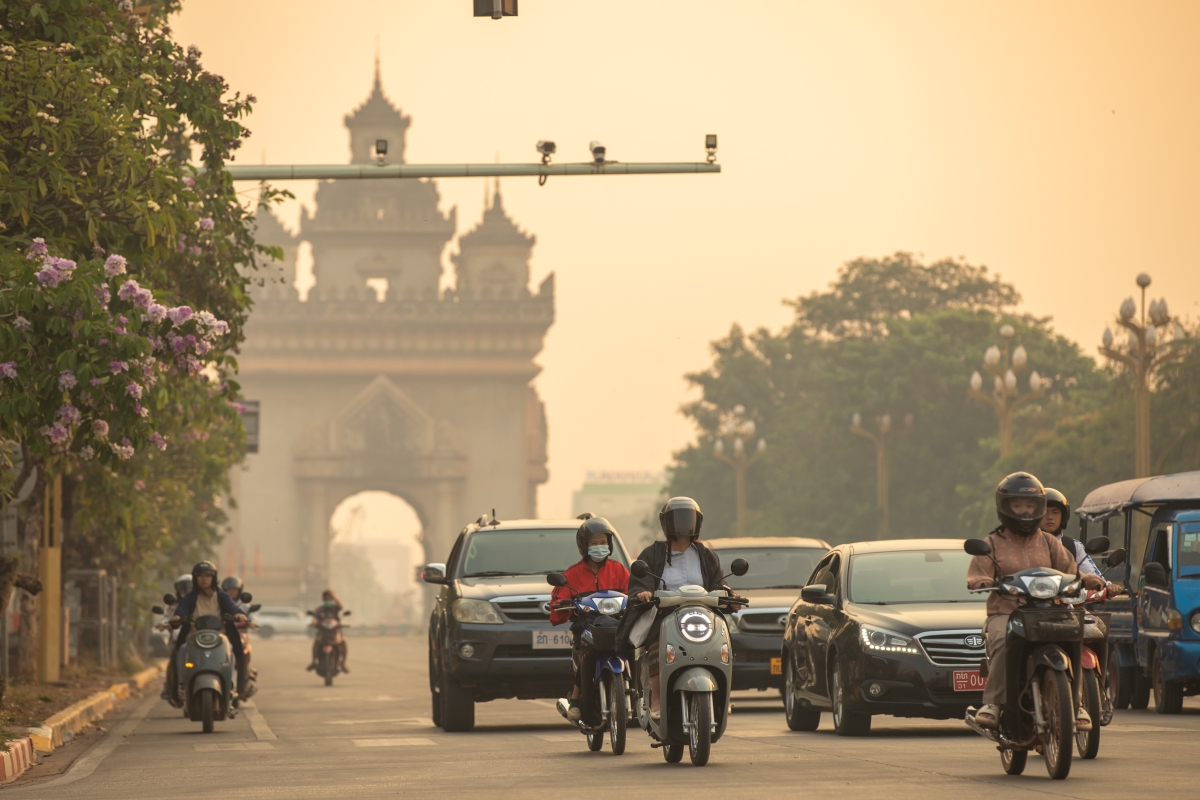
The picture shows the street view of Vientiane, the capital of Laos. Source: Xinhua News Agency
Despite facing headwinds, Manuela Ferro, Vice President for East Asia and the Pacific at the World Bank, emphasized that even in times of uncertainty, growth in East Asia and the Pacific continues to outperform most parts of the world. As the largest economy in the region, the World Bank predicts that China's economic growth rate will slow down from 5.0% to 4.2%, and slightly rebound to 4.3% in 2027; The growth rate of other regional economies will also drop to 4.1%, but with the easing of geopolitical tensions, it is expected to rebound strongly to 5.0% next year. At almost the same time, the Managing Director of the International Monetary Fund (IMF), Georgieva, also issued a warning in Washington that global growth expectations would be lowered due to the impact of the Middle East conflict, highlighting the severity of the current macroeconomic environment.
The core factor driving this slowdown is the highly consistent judgment of the two institutions - the Middle East conflict.
Aditya Matu, Director of the Research Bureau of the World Bank, pointed out that the energy price fluctuations caused by the Middle East conflict are the primary threat. If fuel prices rise by 50%, households in the region may lose 3% to 4% of their income; The trade barriers brought about by the adjustment of US tariff policies have led to a sharp increase in business operating costs. In this context, internal differentiation is evident: countries such as Laos and Mongolia are under pressure due to high debt and high external financing needs, while China has demonstrated stronger risk resistance by reducing energy intensity and expanding the proportion of renewable energy.
In times of crisis, artificial intelligence (AI) has become a high-frequency term and potential outlet in reports. Although Malaysia, Thailand, and Vietnam have benefited from the surge in AI related exports by 2025, experts warn that the region is not adequately prepared in terms of skills and infrastructure. Currently, only 13% to 17% of multinational corporations' subsidiaries in China and Thailand are using artificial intelligence, which is only one-third of the proportion in industrialized countries. This means that the enormous potential for productivity improvement still needs to be unleashed.
Faced with short-term shocks and long-term bottlenecks, the World Bank has provided clear policy prescriptions. Ma Tu suggested that countries should abandon the "one size fits all" broad subsidies and prioritize providing targeted support to the poor, vulnerable middle class, and small and medium-sized enterprises to stabilize people's livelihoods while controlling fiscal deficits. At the same time, it is necessary to restart stagnant structural reforms. The experiences of South Korea, Malaysia, and Vietnam have shown that only by implementing industrial policies on the basis of improving infrastructure, education, and regulatory systems can we truly seize the dividends of the digital age and achieve a leap from "short-term stability maintenance" to "long-term growth".
Recommended News
- government approval 2026-04-17
Contact Us
- Phone: 0017194050155
- Fax: 0017194050155
- 邮箱:gelcc1@outlook.com
- Mobile phone: 0017194050155
- Address: Room 500, 1234 International Avenue, Washington, D.C. 20001, USA