
news
Wang Huiyao's Dialogue with Michael Morris: Tribal Psychology and Shared Future in the Age of Globalization
In today's era of increasing tension between globalization and localization, and prevalent geopolitical narratives, how should we learn from Michael Morris' wisdom in his book "The Horde" and actively shape a more inclusive international interaction model, rather than passively falling into a "clash of civilizations"? How should we understand the concept of "tribe" proposed by him in the context of great power games?
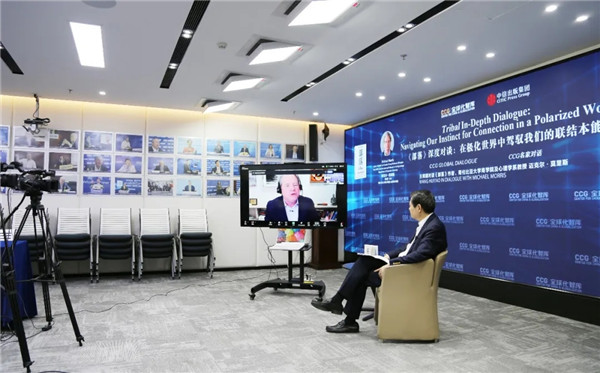
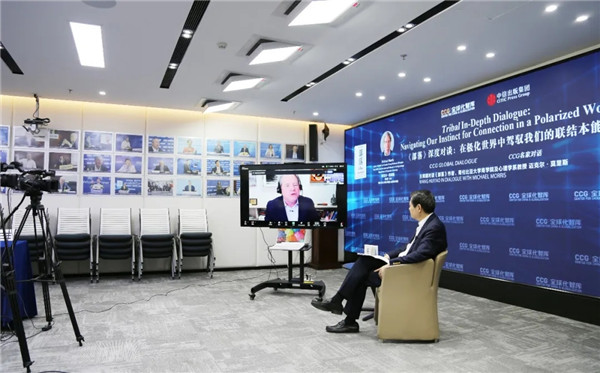
On January 16, 2026, the Global Experts Dialogue Series of the Globalization Think Tank (CCG) invited Professor Michael Morris from the Department of Business and Psychology at Columbia University to have a dialogue with Professor Wang Huiyao, founder and chairman of CCG. Both sides focused on topics such as "tribal instincts" and cross-cultural interaction, exploring the connotation of tribal concepts, the value of cultural plasticity, and how to use understanding of tribal psychology to resolve global differences and promote international cooperation.
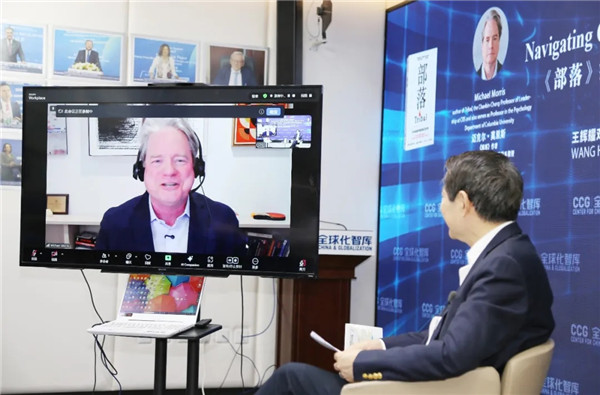
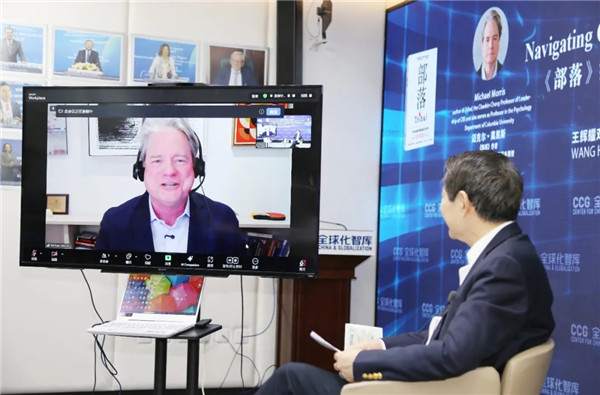
Maurice first introduced his work 'The Tribe' and analyzed the conflicts of modern civilization from the perspective of 'multiple identities'. He pointed out that understanding human tribal instincts helps to gain a deeper understanding of the roots of social polarization, nationalism, and populism. Tribal psychology itself is an adaptive mechanism that enables humans to establish trust and cooperation in large communities, but when society rapidly changes or cultural differences intensify, tribal instincts may spiral out of control, leading to cognitive biases, social conflicts, and political divisions. He illustrated through examples such as the European refugee crisis, Swedish immigration issues, and the election of New York City's new mayor, Zulan Mandani, that political leaders can transform tribal instincts into positive forces for social integration by focusing on people's livelihoods and integrating multi-ethnic interests, rather than simply using divisive tools.
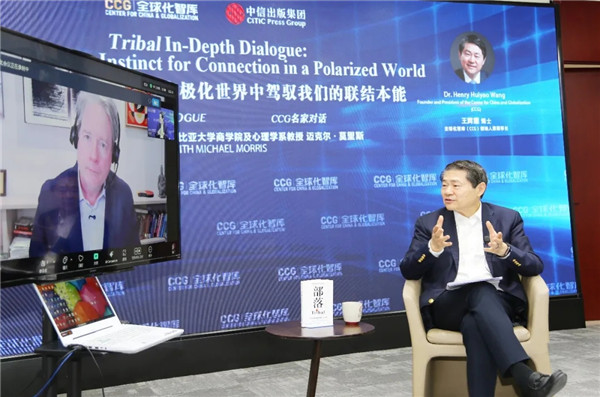
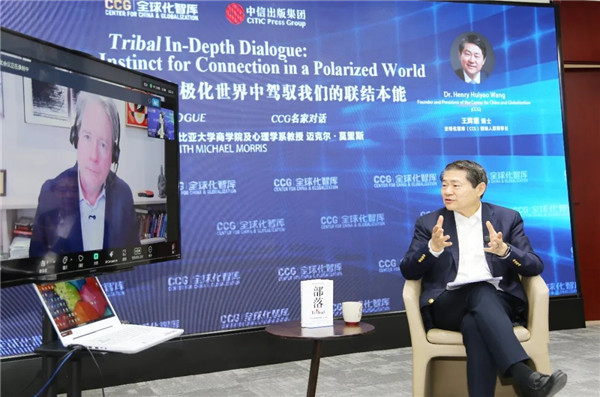
In the following conversation, both sides delved into the concept of "tribe" from different perspectives. Wang Huiyao proposed from a cross-cultural and values perspective that understanding tribal instincts not only helps explain global populism and social polarization, but also guides international cooperation and social integration. He emphasized that the family values and the concept of "one family under heaven" in traditional Chinese culture provide important inspiration for establishing trust and consensus across ethnic groups and borders. Wang Huiyao believes that by promoting family values, education, and the spirit of hard work, as well as promoting cross-cultural communication, humanity can achieve social integration and a shared future on the basis of respecting differences.
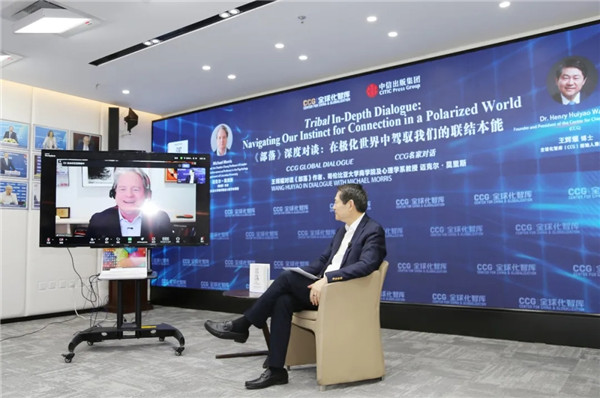
Maurice emphasized that tribal instincts are not only an important mechanism for humans to adapt to large communities and complex social networks, but also a potential source of conflict. He pointed out that when society undergoes rapid changes, cultural differences increase, or the information environment becomes complex, tribal psychology may be amplified, leading to cognitive biases, social polarization, and political divisions. But he also emphasized that political and social leaders can transform this instinct into a positive force for social cohesion by focusing on people's livelihoods and integrating the interests of multiple ethnic groups.
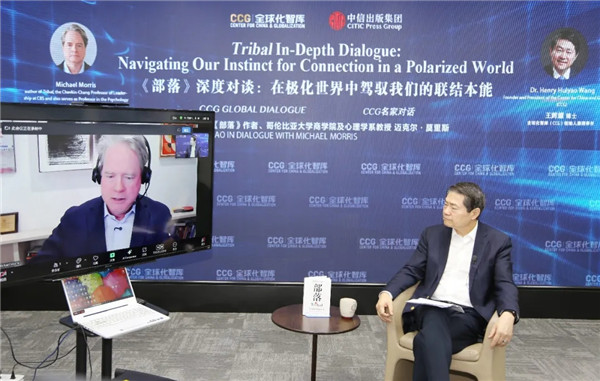
In this conversation, both parties interpreted the influence of tribal instincts and the ways of cross-cultural coexistence from the perspectives of psychology, globalization process, multipolar world, linguistics, cross-cultural perspective, cultural differences, artificial intelligence, and other aspects. Maurice combined psychological research to explain the differences in thinking patterns between the East and the West, mentioning the phenomenon of "code switching" and believing that cross-cultural experiences can promote empathy; In response to the wave of immigration and the rise of populism brought about by globalization, he analyzed the manifestation of tribal instincts losing control, pointed out that right-wing populism is a superficial response to the problem, and also gave examples to illustrate that tribal psychology can be used to build inclusive alliances. Wang Huiyao, based on the practical experience of China's development, deeply explored the organic combination of systematic talent selection and promotion mechanism, collectivism spirit and market economy model, and entrepreneurial innovation spirit. It is this unique development paradigm that has jointly created the brilliant achievements of China's reform and opening up for more than 40 years.
Regarding the reshaping of tribal forms by technology, Morris emphasized the "moral performance" on social media. He believes that this phenomenon stems from the innate desire for prestige in tribes, which is amplified by algorithms and platform mechanisms, exacerbating political polarization and the erosion of public discussion space. He suggests defining platform responsibilities through adjusting regulatory standards, while maintaining cautious optimism about the potential of artificial intelligence to alleviate polarization. Wang Huiyao approaches from another dimension, emphasizing that family values are the universal instinct that is most likely to resonate globally. He pointed out that "family" may become a cross-cultural common language, based on the Chinese wisdom of "one family under heaven", extending the spiritual essence of family ethics to the international community, and providing a core bond for cross-cultural cooperation.
Maurice agrees with this and believes that tribes are "families beyond families". The traditional Chinese culture of including strangers in quasi kinship relationships is highly valuable, and cross-cultural emotional connections are more profound than cognitive understanding. He suggested that international exchanges should focus on young people's study abroad and cross-border life experiences to establish genuine emotional connections, rather than just superficial cognitive interactions.
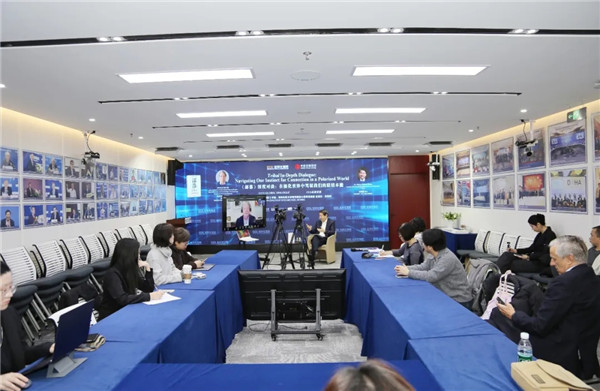
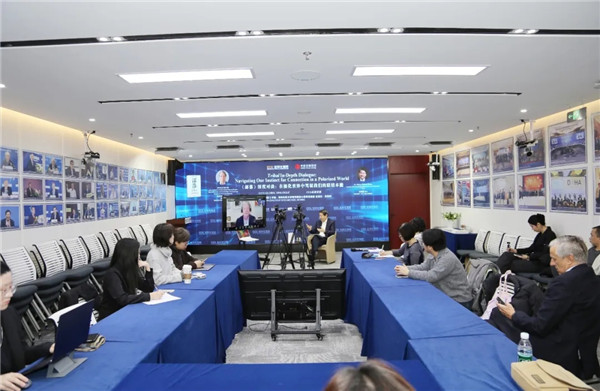
This issue of CCG Expert Dialogue focuses on "tribal psychology, globalization challenges, and the impact of digital technology on social cognition, as well as possible paths for cross-cultural communication and shared future", fully reflecting the positive role of Expert Dialogue series activities as a high-end international exchange platform in promoting multi-party communication and policy communication.
The "CCG Global Experts Dialogue" is a series of activities initiated by Dr. Wang Huiyao, founder and chairman of the Global Think Tank (CCG), in November 2020. The aim is to innovate international communication methods and build a new bridge for communication between China and foreign countries through in-depth dialogue and synchronized live streaming at home and abroad. This series adheres to the principles of rationality, objectivity, and constructiveness, inviting opinion leaders, renowned scholars, and political elites in the international political and economic fields to explore topics related to the current state of globalization and China's role in the globalization process, in conjunction with current international hot topics.
Since the launch of this series, CCG Chairman Wang Huiyao and CCG experts have had in-depth conversations with over 100 internationally renowned opinion leaders, including Pascal Lamy, Thomas Friedman, John Thornton, Martin Wolf, Susan Thornton, Graham Allison, Joseph Nye, Angus Deaton, Wendy Cutler, Neil Bush, John Hamre, Adam Posen, and J. Stajian. Pleton Roy, David M. Lampton, Stephen Roach, Lord Jim O'Neill, Jeppe Kofod Senior policy makers such as Gordan Grli Radman, Ravi Agrawal, H.E. Margus Tsahkna, Kishore Mahbubani, Peter Trubowitz, well-known researchers at think tanks, renowned China issue researchers, media professionals, and columnists.
Recommended News
- government approval 2026-04-17
Contact Us
- Phone: 0017194050155
- Fax: 0017194050155
- 邮箱:gelcc1@outlook.com
- Mobile phone: 0017194050155
- Address: Room 500, 1234 International Avenue, Washington, D.C. 20001, USA