
news
The UK economy showed a multi-dimensional cooling signal in early June, will UK economic growth be cut in half?
At the beginning of June, the UK economy showed signs of cooling across multiple dimensions. Will UK economic growth be cut in half?A survey released by the Bank of England last Friday indicates that, as the initial energy-price shock triggered by the Iran crisis fades, British firms expect the pace of price increases over the next year to be slower than it was in April.
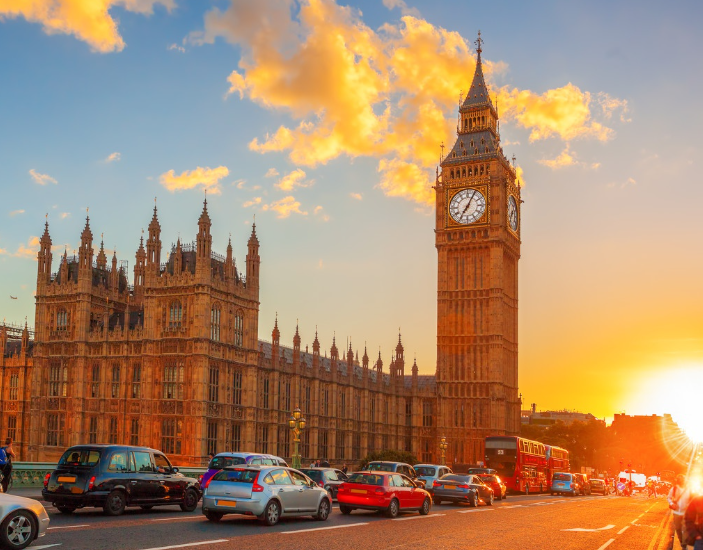
The UK economy showed multi-faceted cooling signals in early June.
Data from the Bank of England’s Decision-Making Panel (DMP) for May show that businesses expect prices to rise by 4.0% over the next 12 months, down from the more than two-year high of 4.4% recorded in April, but still above the 3.4% forecast in February, prior to the outbreak of the conflict. On a three-month moving average basis, price expectations rose by 0.2 percentage points to 4.0%, the highest level since February 2025.
The survey, which covers more than 2,000 British companies, found that 57% of firms expect to pass on the impact of rising energy prices through price increases, down 7 percentage points from April, while 68% anticipate a decline in profit margins, unchanged from April. Since the U.S. and Israel launched a war against Iran at the end of February, energy prices have risen sharply. Before deciding whether to raise interest rates, the Bank of England is eager to assess how much of the increase in costs will be passed on to consumers. Other surveys also indicate that many companies are planning to raise prices.
May’s data also indicate that companies plan to cut employment by 0.4% over the next 12 months, marking the largest planned reduction in six months. Over the three months ending in May, businesses projected a wage growth rate of 3.4% for the coming year, the lowest level since the regular survey began in July 2022. Rob Wood, chief UK economist at Pantheon Macroeconomics, stated: “Monetary policymakers may take some comfort in the fact that second-round effects on firms’ inflation expectations appear to be relatively muted so far, though they also need to contend with slowing employment growth.”
Financial markets expect the Bank of England to hold its benchmark interest rate steady at 3.75% at its meeting later this month, but anticipate one or two 25-basis-point hikes later this year. Money markets indicate that the first rate hike is expected around September, with a roughly 50% probability of a second hike before the end of the year. Raising interest rates typically enhances a currency’s attractiveness, but given the UK’s sluggish economic growth and rising inflation, higher borrowing costs could also harm consumers and businesses.
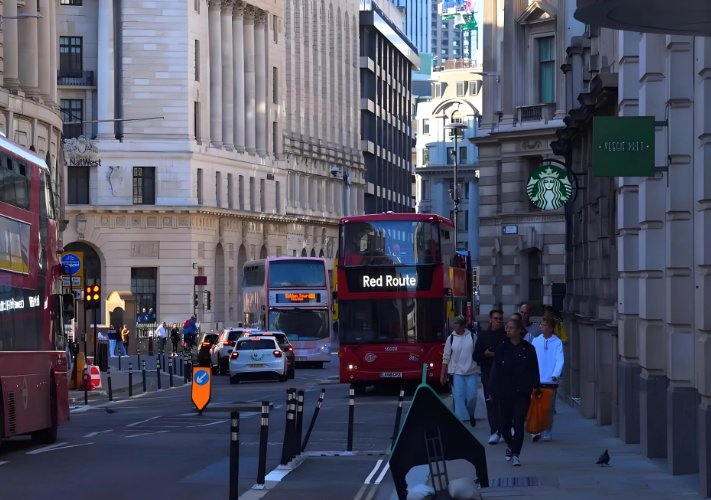
Will the UK’s economic growth be cut in half?
Regarding housing pricesAccording to May data from Halifax, UK house prices fell by 0.1% month-on-month, marking the third consecutive monthly decline and contrasting with market expectations of a 0.1% increase. Year-on-year growth stood at just 0.5%, well below the anticipated 1.0%. Amanda Bryden, head of mortgages at Halifax, noted that property price trends continue to reflect the uncertainty surrounding the Middle East situation. Although mortgage rates have edged lower recently, elevated inflation expectations have kept borrowing costs above their year‑end levels, exacerbating affordability pressures and dampening demand.
On the inflation frontAccording to the Bank of England’s May survey of the Decision-Maker Panel (DMP), businesses expect price increases of 4.0% over the next 12 months, down from the more than two-year high of 4.4% recorded in April, but still above the 3.4% level observed before the conflict erupted. Among the more than 2,000 companies surveyed, 57% expect to raise prices in response to the energy price shock—down 7 percentage points from April—while 68% anticipate a decline in profit margins. The Bank of England is eager to assess how much of the current energy price shock will be passed on to consumers before deciding whether to raise interest rates.
Regarding interest ratesFinancial markets currently expect the central bank to keep borrowing costs unchanged at 3.75% this month, but anticipate one or two rate hikes later this year. However, Bank of England Governor Andrew Bailey stated that, with the UK economy remaining weak and the outcome of the conflict in Iran still uncertain, the central bank will not rush to raise interest rates. For the time being, tolerating inflation above the 2% target is an appropriate approach, but such tolerance would be eroded if signs of second-round effects were to emerge.
U.K. stocks posted a mixed performance last Friday. The FTSE 100 Index (.FTSE) edged up 0.07% against the global risk-off sentiment, closing at a recent high, while the FTSE 250 Mid-Cap Index (.FTMC) fell by 1%. Both major indices posted weekly declines last week, with the mid-cap index snapping its previous two-week winning streak.
On the economic front, the Bank of England’s latest survey indicates that, as the energy‑price shock triggered by the Iran crisis gradually subsides, UK firms’ expectations for price increases over the next year are lower than in April. Among the more than 2,000 companies surveyed, 57% expect to raise prices in response to the energy shock, a decrease of 7 percentage points from April. Paul Dales, Chief UK Economist at Capital Economics, stated that a weak labor market will prevent the second-round inflationary effects that the Bank of England fears, and the Bank’s decision not to raise interest rates may set it apart from other central banks. Traders expect the Bank of England to hold borrowing costs steady at 3.75% this month, but anticipate one or two 25-basis-point rate hikes later this year.

At the beginning of June, the UK economy showed signs of cooling across multiple dimensions. Will UK economic growth be cut in half?During the Middle East conflict, energy prices have been highly unpredictable, making it difficult to provide guidance on the direction of interest rates. She noted that if the Middle East conflict is resolved swiftly and oil prices plunge, another rate cut would be appropriate; however, should the situation deteriorate, a prudent tightening of monetary policy might be warranted. A new forecasting model from University College London indicates that the inflation rate will rise to 3.0% in May, up from 2.8% in April, while second-quarter GDP growth is expected to decelerate from 0.6% in the first quarter to 0.3%.
Recommended News
- government approval 2026-04-17
Contact Us
- Phone: 0017194050155
- Fax: 0017194050155
- 邮箱:gelcc1@outlook.com
- Mobile phone: 0017194050155
- Address: Room 500, 1234 International Avenue, Washington, D.C. 20001, USA